Douglas Regional 9-1-1: Training
Every new Emergency Communications Specialist begins with a two-week Call Taking Academy. This classroom-based academy provides trainees with the foundation they need before beginning hands-on training in the communications center.
During the academy, trainees learn:
- Agency policies and procedures
- Unit call signs
- Call types and response priorities
- CCIC/NCIC systems and requirements
- Douglas and Elbert County geography
- Agency jurisdictions and response areas
- Liability and documentation
- Available public safety and community resources
- Computer-Aided Dispatch (CAD)
- 9-1-1 and non-emergency call handling
- Radio terminology and basic public safety communications
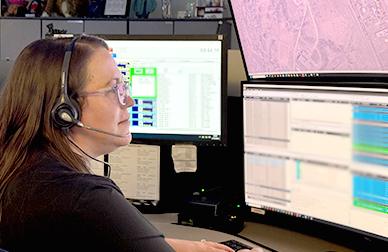
After successfully completing the academy, trainees move into on-the-job training where they work alongside experienced Communications Training Officers (CTOs). Training combines instruction, observation, hands-on experience, feedback, and regular performance evaluations.
No two days in 9-1-1 are the same. Our training program is designed to prepare dispatchers to make decisions, communicate clearly, and remain calm when situations change quickly.
Dispatch Positions:
ECS 1 (Call Taker)
At this level, employees focus on becoming proficient 9-1-1 call takers. Trainees learn how to gather critical information quickly, determine the appropriate response, accurately document calls in CAD, and communicate with callers who may be experiencing stressful or life-threatening situations.
ECS I employees also complete Emergency Medical Dispatch (EMD) training, which prepares them to provide lifesaving pre-arrival instructions such as CPR, childbirth assistance, bleeding control, and other emergency medical instructions until responders arrive.
Once an employee demonstrates proficiency in call taking and completes all required training and certifications, they are eligible to progress to ECS II.
ECS II
ECS II builds on the skills learned in ECS I and introduces radio dispatching.
Employees begin training on one of the center’s dispatch disciplines (law radios or fire radios) and learn how to manage radio traffic, dispatch appropriate resources, monitor responder status and safety, coordinate additional resources, and manage multiple incidents at the same time.
Radio training requires dispatchers to listen, communicate, document, prioritize, and make decisions simultaneously. Trainees work directly with a CTO until they demonstrate they can safely and independently manage their assigned dispatch position.
After successfully completing the required ECS II training, employees continue building their skills and experience as they work toward becoming fully cross-trained.
ECS III
ECS III is the fully cross-trained level at Douglas Regional 9-1-1.
ECS III employees have successfully completed training in call taking, law radios, and fire radios. They can work independently throughout the communications center.
At this level, dispatchers have demonstrated the ability to manage routine calls as well as complex and rapidly changing incidents involving law enforcement and fire/EMS. They effectively coordinate resources, maintain responder safety, and contribute to effective dispatch operations
Training does not end when an employee reaches ECS III. Emergency Communications Specialists participate in ongoing continuing education, skills training, policy updates, and quality assurance throughout their careers.