Douglas Regional 9-1-1: Frequently Asked Questions
When should I call 9-1-1?
Call 9-1-1 when an emergency requires an immediate response from law enforcement, fire, or emergency medical services.
Examples include:
- A crime in progress
- A fire
- A serious injury or medical emergency
- A traffic crash with injuries
- A person who is unconscious or not breathing
- An impaired or dangerous driver
- A situation involving a weapon
- A person who is in immediate danger
- Any situation where someone’s life, safety, or property is in immediate danger
If you’re unsure whether the situation is an emergency, call 9-1-1 and let the dispatcher help determine the appropriate response.
When should I use the non-emergency number?
Use the non-emergency number when you need law enforcement assistance but there is not an immediate threat to life or safety and the incident is not actively occurring.
Examples may include delayed theft reports, property damage discovered after the fact, suspicious activity that is no longer occurring, or other situations that do not require an emergency response.
Online Reporting
Not every incident requires a deputy to respond in person. For certain non-emergency incidents, the Douglas County Sheriff’s Office offers online reporting, allowing you to submit a report from your computer, phone, or tablet.
Using online reporting for eligible incidents helps keep 9-1-1 lines available for emergencies and allows deputies and dispatchers to remain available for calls that require an immediate response.
The online reporting system will guide you through the process and help determine whether your incident is eligible to be reported online.
Why does the dispatcher ask so many questions?
Every question has a purpose.
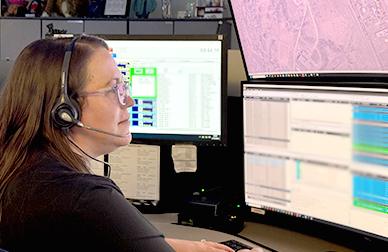
Dispatchers need to determine where the emergency is, what is happening, who is involved, whether anyone is injured, whether weapons are present, and what responders may encounter when they arrive.
The information you provide helps us send the appropriate resources and gives responders important information before they reach the scene.
Are responders waiting until I finish answering questions?
No. In most emergencies, responders can be dispatched while the call taker continues gathering information from you.
Information entered into our Computer-Aided Dispatch (CAD) system is updated throughout the call so dispatchers and responders can receive new information while units are responding.
Why do you ask for my address if my phone already provides my location?
Technology helps us locate callers, but it isn’t perfect.
Depending on your phone, surroundings, and other factors, the location provided to 9-1-1 may be approximate. Dispatchers will ask you to confirm the address or location to make sure responders are being sent to the right place.
Knowing your location is one of the most important pieces of information you can provide when calling 9-1-1.
What if I don't know exactly where I am?
Tell the dispatcher everything you do know.
Look for street signs, business names, mile markers, trail markers, landmarks, intersections, building numbers, or other identifying features. If you’re driving, provide the road you’re traveling on, your direction of travel, and the last intersection or landmark you passed.
The dispatcher will work with you and available technology to help determine your location.
What happens if I accidentally call 9-1-1?
Stay on the line and tell us it was an accident.
You aren’t in trouble for accidentally calling 9-1-1. If you hang up, a dispatcher will need to call you back to make sure there isn’t an emergency.
Staying on the line and letting us know everyone is okay is the quickest way to resolve an accidental call. A deputy will be notified and may be dispatched to your location to confirm there is no emergency.
Can I call 9-1-1 for someone in another city or state?
If possible, someone who is physically at the location of the emergency should call 9-1-1.
Their call is more likely to reach the 9-1-1 center responsible for that area and provides dispatchers with better location information. If you’re reporting an emergency for someone somewhere else, tell the dispatcher immediately where the emergency is occurring.
We will work to get the information to the appropriate agency.
Can I text 9-1-1?
Yes. Text-to-911 is available for situations when you cannot safely make a voice call.
Call if you can, and text if you can’t.
When texting 9-1-1, provide your location and a brief description of the emergency in your first message whenever possible. Keep your phone nearby and answer the dispatcher’s questions.
Do not send group texts, photos, videos, emojis, or abbreviations unless instructed to do so.